Educational laboratories have undergone remarkable transformation over the past decade. The traditional laboratory model—rows of fixed benches, prescriptive experiments with predetermined outcomes, passive learning where students follow instructions without understanding principles—no longer prepares students for a world demanding creativity, critical thinking, collaboration, and technological fluency. Today’s educational institutions recognize that laboratory spaces must evolve into dynamic learning environments that inspire curiosity, enable exploration, integrate technology, and prepare students for rapidly changing career landscapes.
This transformation is particularly evident in the emergence of STEAM education—Science, Technology, Engineering, Arts, and Mathematics—which integrates these disciplines into cohesive, real-world learning experiences. STEAM laboratories break down traditional subject barriers, encourage interdisciplinary thinking, provide hands-on problem-solving opportunities, and connect classroom learning to practical applications. Schools and universities that modernize their laboratory facilities with STEAM principles report increased student engagement, improved learning outcomes, enhanced creativity, and better preparation for higher education and careers.
This article explores the evolution of educational laboratories from traditional models to modern STEAM environments, examines key components of effective STEAM laboratory design, discusses technology integration strategies, and provides practical guidance for educational institutions planning laboratory modernization projects.
The Case for Laboratory Modernization
Many educational institutions continue operating laboratories designed decades ago with equipment reflecting older pedagogical approaches. While familiar and functional for traditional teaching methods, these laboratories limit the educational experiences they can provide.
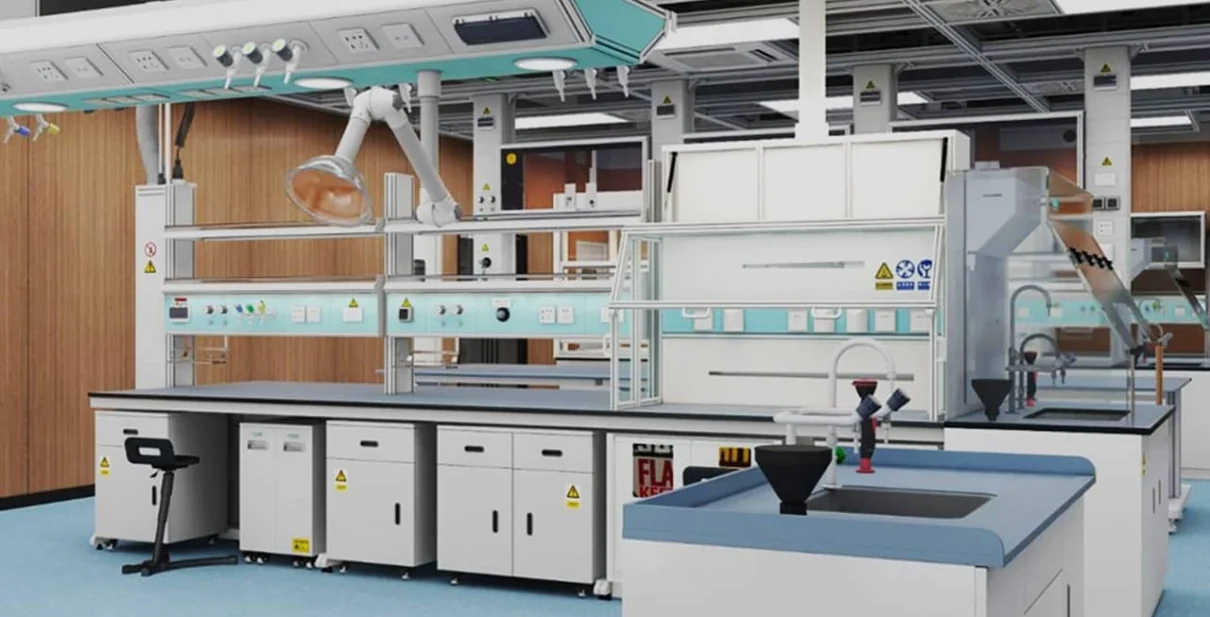
Traditional laboratory limitations become apparent when examined critically. Fixed furniture arrangements restrict collaborative work and flexible space utilization. Equipment focused on demonstration rather than exploration limits hands-on student engagement. Isolation from other subjects reinforces artificial disciplinary boundaries. Technology integration is minimal or nonexistent. Safety considerations sometimes overshadow learning objectives. The result is laboratories that feel dated, unstimulating, and disconnected from how students will actually use science and technology in their future education and careers.
Modern learning science emphasizes several principles that laboratory design must support. Students learn most effectively through active engagement rather than passive observation. Collaborative problem-solving develops critical workplace skills while deepening understanding. Integration of knowledge from multiple disciplines mirrors real-world challenges. Technology should amplify rather than replace hands-on exploration. Learning environments should inspire creativity and curiosity rather than prescribe rigid procedures.
STEAM laboratories embody these principles by creating spaces where students design, build, test, analyze, and iterate. Rather than following cookbook procedures to predetermined outcomes, students tackle open-ended challenges with multiple solution paths. They collaborate in teams, combining different perspectives and skills. They use technology as a tool for design, data collection, analysis, and communication. They experience the creative satisfaction of bringing ideas to reality through making and building.
The benefits of laboratory modernization extend beyond improved learning outcomes. Students demonstrate increased engagement and enthusiasm for STEM subjects. Teachers report more enjoyable and effective teaching experiences. Schools differentiate themselves in competitive educational markets. Most importantly, students develop the technical skills, creative thinking, collaboration abilities, and confidence that will serve them throughout their education and careers.
Essential Components of Modern STEAM Laboratories
Effective STEAM laboratories integrate several components creating versatile, engaging learning environments. While specific implementations vary based on available space, budget, and curricular goals, certain elements consistently support successful STEAM education.
Flexible physical space design accommodates diverse activities and teaching approaches. Movable furniture allows rapid reconfiguration from individual work to small group collaboration to large group instruction. Mobile equipment carts bring tools and materials where needed rather than constraining activities to fixed locations. Clearly defined zones for different activities—computer work, electronics experimentation, mechanical construction, wet chemistry, 3D printing, presentation—help organize space while maintaining flexibility.
Adequate power, data, and utilities infrastructure supports modern equipment and technology. Multiple electrical outlets throughout the space eliminate extension cord hazards while providing convenient power access. Network connectivity enables online resources, collaboration tools, and cloud-based design software. Compressed air for pneumatic projects, water access for certain experiments, and proper ventilation for activities generating fumes or dust should be incorporated where relevant to planned activities.
Maker space tools and equipment provide hands-on building and creation capabilities. 3D printers allow students to design and fabricate physical objects from digital models. Laser cutters enable precise cutting and engraving of various materials. Basic hand tools, power tools, and electronics equipment support construction projects. These tools transform abstract concepts into tangible reality, making learning concrete and memorable.
Robotics and programming platforms teach computational thinking and automation principles through engaging, physical systems. Educational robotics kits with programmable controllers, sensors, and actuators let students design, build, program, and test robotic systems. Various difficulty levels and expansion options accommodate students from elementary through university levels. Programming platforms from visual block-based systems for beginners to advanced text-based languages for experienced students support learning progression.
Electronics and circuit design equipment introduces electrical engineering concepts through hands-on experimentation. Breadboards for temporary circuit construction, basic components like resistors, capacitors, and LEDs, microcontroller development boards, oscilloscopes for signal visualization, and multimeters for measurements give students practical experience with electronic systems. Many everyday technologies incorporate electronics—providing laboratory tools for hands-on electronics education helps students understand the technology surrounding them.
Digital fabrication and design software enables computer-aided design and engineering. CAD software for 3D modeling, electronic design automation tools for circuit layout, programming environments for software development, and simulation software for testing designs virtually before physical construction provide students with industry-standard tools. Learning these software platforms develops valuable technical skills while supporting project-based learning.
Science equipment for traditional and investigative experiments remains important in STEAM laboratories despite the technology focus. Quality microscopes, basic chemistry glassware and reagents, physics experiment equipment for mechanics and optics, measurement instruments for temperature, pH, and other parameters, and safety equipment support scientific inquiry across disciplines. The key difference from traditional laboratories is emphasis on open-ended investigations rather than confirmatory experiments.
Display and presentation systems support instruction, student presentations, and documentation of work. Interactive whiteboards or large displays for instruction and collaboration, document cameras for demonstrating techniques and displaying work, charging stations for tablets and laptops, and areas for displaying student projects create a learning environment where communication and sharing are emphasized alongside individual work.
Technology Integration Strategies
Technology in STEAM laboratories should amplify learning rather than distract from it. Effective technology integration requires careful planning, clear pedagogical purposes, appropriate device selection, and ongoing professional development for teachers.
Determine technology purposes before selecting specific tools. Will technology primarily support design activities through CAD and simulation software? Enable data collection and analysis through sensors and instruments? Facilitate research and collaboration? Support documentation and presentation of student work? Each purpose suggests different technology solutions—thoughtful analysis prevents buying expensive equipment that sits unused because it doesn’t actually support learning objectives.
Select appropriate devices and platforms considering several factors. Ease of use and learning curve must match student developmental levels and available instructional time. Reliability and durability are essential—frequent device failures frustrate students and teachers while consuming valuable learning time. Compatibility with existing infrastructure including network capacity, power availability, and technical support capabilities prevents implementation problems. Cost must fit within budget while providing sufficient quantity for meaningful classroom use.
Develop clear technology use policies and training. When and how students access devices, acceptable use guidelines, device care and maintenance expectations, internet safety protocols, and data privacy procedures should be established before implementation. Both students and teachers need training not just on device operation but on effective integration into learning activities.
Plan for ongoing technical support and maintenance. Educational technology requires regular updates, troubleshooting, repairs, and eventual replacement. Inadequate technical support dooms technology implementations as broken devices accumulate and frustrated teachers abandon use. Whether through in-house technical staff, external support contracts, or simplified device ecosystems minimizing support needs, ensure reliable technical support accompanies technology deployment.
Implementing Laboratory Modernization Projects
Transforming traditional laboratories into modern STEAM environments requires careful planning, stakeholder engagement, and systematic implementation. Successful projects follow structured approaches balancing educational goals, physical constraints, budget realities, and change management.
Begin with a comprehensive needs assessment engaging all stakeholders. What learning outcomes should modernized laboratories support? What constraints exist regarding space, infrastructure, and budget? What curricular changes accompany physical transformation? What professional development will teachers need? What timeline is realistic? Thorough needs assessment prevents expensive mistakes while building stakeholder buy-in essential for success.
Develop a clear vision for the transformed space articulated through design principles, example activities students will conduct, teacher workflow considerations, and visual representations through sketches or renderings. This vision guides detailed design decisions while communicating plans to administrators, teachers, students, and community stakeholders whose support is essential.
Engage qualified professionals for design and implementation. While in-house facilities staff may handle certain aspects, specialized laboratory design expertise, educational technology knowledge, safety compliance understanding, and project management experience significantly improve outcomes. Professional designers familiar with educational laboratories help optimize space utilization, specify appropriate equipment, ensure code compliance, and manage implementation logistics.
Plan implementation thoughtfully considering timing, phasing, and change management. Complete transformation during single summer break minimizes instructional disruption but requires intensive effort and may stress budgets. Phased implementation over multiple years spreads costs and allows learning from early phases to inform later work but requires temporary arrangements and multiple disruption periods. Engage teachers in planning and professional development before, during, and after physical transformation—new spaces and equipment are worthless if teachers don’t know how to use them effectively.
Budget comprehensively including all project costs. Construction and infrastructure modifications, furniture and fixed equipment, technology and tools, initial supplies and consumables, professional development for teachers, and contingency reserves for unexpected issues should all be considered. Projects frequently exceed initial budgets when costs are underestimated—comprehensive budgeting prevents nasty surprises.
Professional Development for Teachers
Even the most magnificently equipped STEAM laboratory fails if teachers can’t effectively facilitate learning within it. Laboratory modernization must include substantial professional development enabling teachers to transition from traditional to inquiry-based, project-oriented instruction.
Initial training familiarizes teachers with new equipment, safety procedures, and basic operation. Hands-on practice using tools, programming robots, operating 3D printers, and conducting example activities builds teacher confidence and competence. Safety training on power tools, chemicals, and other potentially hazardous equipment ensures teachers can properly supervise student activities.
Pedagogical professional development helps teachers transition from traditional cookbook laboratory instruction to facilitating open-ended, student-driven inquiry. This shift challenges many teachers accustomed to structured, teacher-directed approaches. Professional development addressing question development, project design, student assessment, facilitation versus direction, and managing productive ambiguity helps teachers develop new skills.
Ongoing support and collaboration sustains effective STEAM teaching after initial training. Regular meetings where teachers share successful activities, troubleshoot challenges, and collaboratively develop new projects build professional learning communities. Access to external resources including curriculum materials, online communities, and expert consultations provides ideas and inspiration. Administrative support including planning time, materials budgets, and recognition of quality work signals institutional commitment to STEAM education.
Measuring Impact and Continuous Improvement
Laboratory modernization represents significant investment deserving systematic evaluation. Measuring outcomes demonstrates value while identifying opportunities for improvement.
Student learning outcomes are the ultimate measure of success. Compare student performance, engagement, and attitudes before and after laboratory modernization using appropriate metrics. Standardized test scores, project quality, student surveys, and longer-term tracking of STEM course enrollment and career choices provide evidence of impact.
Teacher and administrator perspectives offer valuable insights. Surveys and interviews exploring perceived benefits, implementation challenges, needed improvements, and professional development needs guide ongoing program refinement.
Facility utilization data reveals how spaces are actually used versus designed intent. If certain tools rarely see use, why? If spaces are oversubscribed, what additional resources would help? Usage patterns inform adjustments and future planning.
Regular review and adjustment keeps STEAM laboratories fresh and relevant. Technology and educational practices evolve rapidly—laboratories should too. Annual review of equipment, curriculum, professional development, and facilities identifies needed updates preventing obsolescence.